
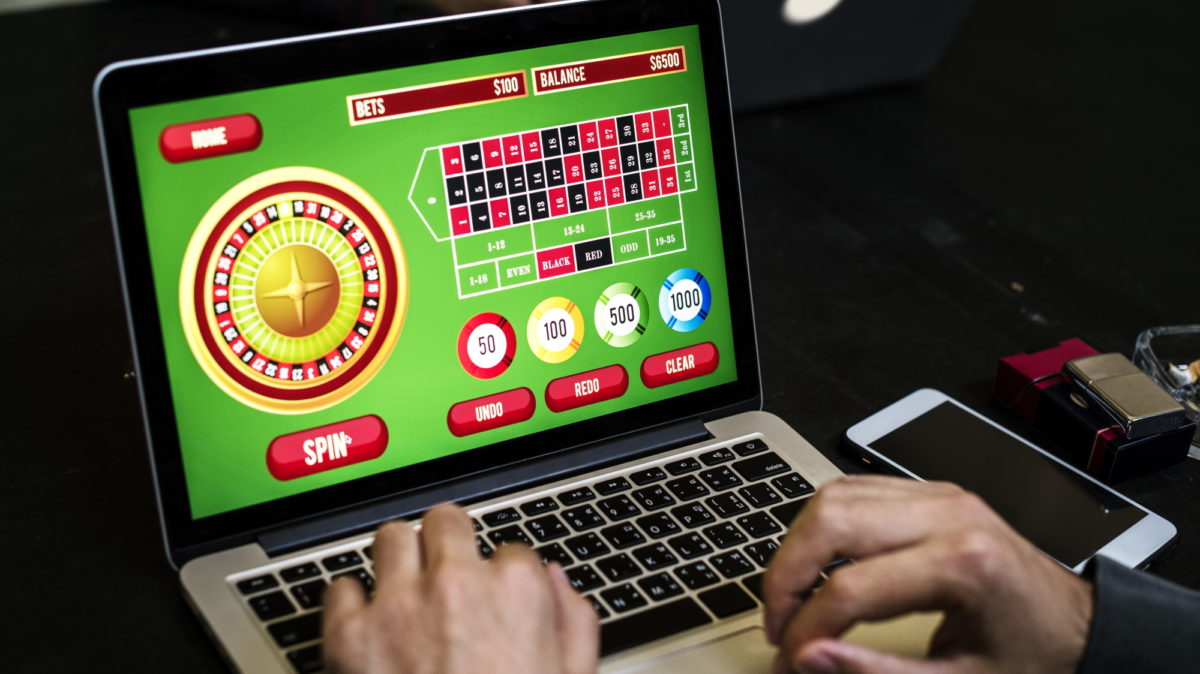
Walking into any online casino for the initial time, the concern that stops most of us cold is a simple one: can I truly win here, or is the entire system fixed against me from the start? We hear that query constantly, and it merits a direct answer spinbosss.ca. The reality is that reputable online casinos function under stringent mathematical and oversight frameworks that make fairness measurable and verifiable, not just a advertising claim. Understanding those structures converts the experience from unquestioning trust into educated involvement. We are going to walk through precisely how game fairness functions, what technologies ensure it, how you can confirm it on your own, and what separates a honest site from a questionable one. By the conclusion, you will know precisely what to watch for and why it matters whenever you make a bet.
Which Casino Game Fairness Really Means
When we discuss about fairness in casino games, we are not discussing about if you win or lose on any particular session. Fairness relates to a certain, measurable property: the game’s outcomes must be statistically unpredictable, free from manipulation after you place a bet, and need to match the released theoretical return over a large number of rounds. A fair slot machine with a 96% return-to-player rate does not promise you will get back 96% of your money tonight. It indicates that across millions of spins, the mathematical model ensures the house edge functions exactly as advertised, and no external force skews the results further against you. The separation between short-term luck and long-term mathematical certainty is the foundation of everything we will cover. True fairness means the game does not recognize who you are, does not care whether you just deposited or are about to withdraw, and applies the same probability distribution to every single round without memory or adaptation.
The real-world implication is that you are dealing with a closed mathematical system, not an opponent who can change the rules mid-game. For table games like blackjack or roulette, fairness also reaches to the correct simulation of physical probabilities. A digital roulette wheel has to produce numbers with the same distribution as a perfectly balanced physical wheel. A blackjack shoe has to deal cards according to a properly shuffled virtual deck where every card order is equally likely. When we claim a game is fair, we mean the underlying model corresponds to the real-world game it simulates, the random number generation is cryptographically sound, and the operator cannot modify either of those things after the fact. That three-part definition gives you a concrete checklist rather than a vague sense of trustworthiness.
Licensing Bodies and the Standards They Uphold
A casino’s gambling license is not just a piece of paper that allows it to operate. It is a binding legal framework that specifies exactly what the operator must do to keep games fair and protect users. Different licensing jurisdictions set different standards, and the difference between the tightest and the most lenient is vast. The Malta Gaming Authority, the UK Gambling Commission, the Gibraltar Regulatory Authority, and the Kahnawake Gaming Commission are among the authorities that require regular RNG audits, implement strict advertising standards, require responsible gambling tools, and maintain formal dispute resolution processes. handy guide When a casino holds a license from one of these regulators, it has accepted ongoing oversight that entails the power to issue substantial fines and revoke the license completely if fairness standards are compromised. That regulatory risk is a true deterrent against manipulation.
By contrast, licenses from jurisdictions with limited enforcement infrastructure provide little real protection. A certificate from an offshore authority that does not consistently audit its licensees or address player complaints is essentially decorative. We always recommend checking the license information in the casino’s footer. The license number bleacherreport.com should be displayed, and you should be able to verify it on the regulator’s official public register. That takes sixty seconds and shows you whether the operator is truly accountable to a government body or simply displaying a logo. The jurisdiction also determines which dispute resolution services you can access if you suspect a game has malfunctioned or an outcome was biased. Regulated markets typically force operators to engage with independent arbitration services, offering you a path to raise issues beyond the casino’s internal support team.
In what manner Game Fairness Is Verified: Inspectors and Provably Fair Systems
Conventional Third-Party Auditing
Navigate to the footer of any legitimate online casino and you will see small logos from firms like eCOGRA, iTech Labs, GLI, or BMM Testlabs. These are unbiased testing laboratories that focus on certifying gambling software. Their job is to analyze the RNG source code, run billions of simulated game rounds, and validate that the actual results match the theoretical RTP within an suitable statistical margin. They do not just test once. Respected auditors conduct regular monitoring, indicating the casino’s live game data is periodically checked against expected distributions. A certification badge that is valid and clickable, linking to a live certificate, tells you that an external party with no financial stake in your losses has validated the math.
The absence of such badges or the presence of badges that are merely static images without verifiable links should prompt an immediate red flag. We also suggest checking the certificate’s date. An audit from three years ago bears far less weight than one renewed within the last twelve months. The testing scope matters too. Some certificates cover only specific game categories or providers, while others include the entire platform. The most comprehensive audits also verify that player funds are held in segregated accounts, separate from the operator’s operating capital. That is a solvency and security check layered on top of the game fairness verification. When you see a current, verifiable audit certificate from a recognized lab, you are looking at a document that reflects millions of dollars in testing costs and a genuine commitment to transparency.
Provably Fair Technology
A newer approach removes the need to trust an auditor entirely. Provably fair gaming uses cryptographic hash functions to let you personally check that each game outcome was determined fairly and was not altered after your bet was placed. The mechanism works through a three-step process you can follow on every round.
- Prior to you bet, the server produces a random seed and provides its cryptographic hash with you. The hash is a one-of-a-kind fingerprint that can’t be reversed to expose the seed.
- You provide a client seed, often produced by your browser or selected manually. The final outcome is calculated by blending both seeds through a disclosed algorithm.
- After the round, the server unveils its original seed. You run the hash function yourself to validate it aligns with the fingerprint you received earlier. If it matches, the outcome could not have been changed retroactively.
This system shifts verification power directly into your hands. You do not need to trust a third-party auditor’s report because you can on your own confirm each round’s integrity using publicly accessible hashing tools. Several game providers now integrate provably fair mechanics right into their titles, and some entire platforms run exclusively on this model. The learning curve is somewhat steeper for a newcomer, but the concept is elegant. You are fundamentally running a miniature audit on every bet you place. Provably fair systems are most common in proprietary, often crypto-focused games like crash, dice, and certain card games. Major commercial slot studios and live dealer providers still rely on the traditional RNG-plus-auditor model. Both approaches are valid; the key is understanding which one applies to the game you are playing and comprehending how to use the verification tools provided.
Game Types and Their Built-In Fairness Systems
Assorted game types utilize different fairness models, and understanding each one helps you choose games with confidence. We will break down the major categories and describe exactly what ensures each one honest. This is not about the games pay better. It is about the structural safeguards that stop manipulation within each format.
Video Slots
Slots lean entirely on RNG technology combined with a fixed mathematical model termed a par sheet. The par sheet specifies every possible reel combination, the payout for each, and the final overall RTP. Once a slot is certified, the operator is unable to adjust its RTP on the fly. Any RTP configuration changes require re-certification and are typically displayed in the game’s info panel. The spin button activates a single RNG call, and the outcome is locked the moment you press it. Modern slots also log every spin result server-side, creating an auditable record that regulators can cross-check against the expected distribution. The visual presentation of near-misses or bonus teases is carefully regulated in many jurisdictions to guarantee it does not mislead you about the true probability of winning.
Casino Table Games
Virtual table games simulate real decks and wheels using RNG algorithms specifically designed to reflect real-world probability distributions. A digital blackjack game shuffles a digital deck using the Fisher-Yates algorithm, the industry standard for unbiased shuffling, and hands out cards just as a physical dealer would. The game rules are programmed and shown in the game’s help section. The house edge stems solely from the rule set, like the dealer holding on soft 17 or the payout ratio on a natural blackjack. The operator cannot alter without notice these rules without swapping the entire game client with a freshly certified version. When you play digital roulette, the RNG creates numbers that must pass chi-squared statistical tests demonstrating uniform distribution over numerous spins.
Video Poker
Video poker occupies a distinct category because its fairness is the most obvious of any digital game. The deck is a standard 52-card deck, or 53 with a joker in some variants, and the draw probabilities are mathematically fixed. The pay table is displayed directly on the screen, and you can compute the exact RTP of a given pay table using widely available strategy charts. The operator is unable to alter the draw logic because it is built into the certified game software. Your decisions truly affect the outcome, which is why video poker with optimal play can offer some of the lowest house edges available. The fairness mechanism here is essentially mathematical transparency. You can verify the game’s expected return without having to trust any external authority.
Player Return and House Edge Broken Down in Clear Terms
Each casino game you will ever play has two sides of the same mathematical coin: the Return to Player percentage and the house edge. We observe that newcomers often mistake these or treat them as guarantees, so let us define the definitions. Return to Player, abbreviated as RTP, is the percentage of total wagered money that a game is programmed to pay back to players over its entire lifetime. If a slot has a 96% RTP, the theoretical model says that for every 100 units wagered across all players and all time, 96 units will be returned as winnings. The remaining 4 units represent the house edge, which is the casino’s mathematical margin. That margin is not a fee you pay per spin. It is a statistical inevitability that emerges only over enormous sample sizes. In a single evening of play, your personal return could be 200% or 20% or anything in between.
Different game categories carry fundamentally different house edges, and knowing these ranges helps you make informed choices. Classic blackjack with basic strategy can push the house edge below 0.5%, making it one of the most player-favorable games in the casino. European roulette with a single zero carries a 2.7% house edge, while American roulette with its additional double zero jumps to 5.26%. Slots typically range from 92% to 98% RTP depending on the title and jurisdiction, with most clustering around the 94% to 96% range. Video poker variants with optimal play can exceed 99% RTP on certain pay tables. None of these numbers predict your session outcome. They simply tell you the long-run cost of playing, much like knowing the fuel efficiency of a car tells you the long-run cost of driving without predicting the traffic on any specific trip.
Number Randomizers and Their Role in Protecting Your Play
At the heart of every digital casino game lies a piece of software termed a Random Number Generator, or RNG. We need to be precise about what an RNG performs because the term is used loosely. A correctly deployed RNG is no mere random function that a developer wrote in an afternoon. It is a cryptographic algorithm that generates a sequence of numbers so unforeseeable that no amount of computational power can differentiate it from true randomness within any practical timeframe. When you hit spin on a slot, the RNG has already produced the outcome before the reels even start animating. The spinning graphics are just for show. The decision was made in a fraction of a millisecond using a seed value that is continuously receiving new entropy from hardware-level noise sources. That indicates that you nor the casino can time your click to influence the result.
The protection this provides you is twofold. First, it ensures that each game round is unrelated to every other round. A slot machine does not get hot or cold. It does not guarantee a win after a losing streak, and a big jackpot is not a sign the machine will now go quiet. That independence is guaranteed mathematically by the RNG algorithm. Second, the casino itself cannot manipulate outcomes because the RNG operates nonstop and the result is determined at the exact moment of your action. To cheat you, an operator would need to predict your click timing with unrealistic precision and alter the algorithm in real time, something that duly inspected RNGs render unworkable. Comprehending this erases the superstition and allows you to focus on what actually is important: the game’s mathematical design.
Real-Time Dealer Games and the Human Element of Integrity
Live dealer games hold a distinct position in the fairness landscape because they blend physical real-world actions with digital interfaces. When you join a live blackjack or roulette table, you are watching a real human dealer in a dedicated studio shuffle cards or spin a physical wheel. Multiple camera angles capture every movement, and the results are determined by actual physics rather than an RNG. This does not imply the fairness question disappears. It simply moves from trusting an algorithm to having faith in that the physical equipment is regulation, the dealer is observing procedure, and the video feed is not being manipulated. Trustworthy live casino providers like Evolution and Pragmatic Play Live function from studios that are in themselves licensed and periodically inspected by the same regulatory bodies that oversee digital RNG games.
The fairness mechanisms in a live environment include several layers you can see directly. Card shoes are typically transparent so you can verify that no cards are being inserted or removed. Roulette wheels get regular balance checks to confirm no bias exists in the physical mechanism. Dealer rotations stop any single individual from handling the same table for extended periods, reducing collusion risk. The shuffling procedures are standardized and often involve automatic shuffling machines that randomize cards beyond any human capability. From your perspective as a player, you can observe the entire process unfold in real time with no possibility of post-bet outcome alteration because the physical result is apparent the moment it happens. The digital interface simply converts that physical result into your account balance. That transparency makes live dealer games notably appealing if you are uneasy trusting a purely software-based RNG.
Recognizing a Properly Run Live Studio
We seek several concrete indicators when reviewing a live dealer operation.
- The studio setting shows studio-grade lighting, branded gaming tables, and multiple operational tables seen in the background, confirming it is a specialized facility instead of a single-camera setup in an unregulated location.
- The dealer declares actions clearly and maintains a consistent procedure for each hand or spin. The handling of cards is careful and visible, with no hands dropping below the table or moving out of frame.
- The game interface displays the table’s unique identifier and the active dealer’s name, enabling you to record these details whenever you might need to refer to a specific session.
- The provider’s licensing information is accessible directly from the live game lobby, not merely the main casino site. A studio run by a major provider will possess its own gaming licenses apart from the casino brands it provides for.
Payment Handling, KYC, and the Integrity of Getting Paid
Game fairness means nothing if you cannot reliably receive your winnings. The withdrawal process is where theoretical fairness intersects with practical reality, and we consider it an integral part of the overall fairness picture. When you initiate a withdrawal, the casino’s payment team handles it according to documented procedures that involve identity verification, payment method confirmation, and anti-fraud checks. This process, known as Know Your Customer or KYC, is not a hurdle designed to slow down your payment. It is a regulatory requirement that blocks money laundering and identity theft, and it safeguards the integrity of the entire platform. A fair casino makes its KYC requirements clear upfront, processes documents within published timeframes, and does not introduce new requirements after you have won.

Processing times differ by payment method, and a transparent operator lists these ranges openly. Typical timeframes once your withdrawal is approved include:
- E-wallets: inside 24 hours
- Credit and debit cards: 3 to 5 business days
- Bank transfers: 5 to 7 working days
- Cryptocurrency: often within a few hours
The fairness consideration here is uniformity. If a casino advertises 24-hour e-wallet processing, it ought to meet that standard consistently, not only for small amounts or losing players. We also advise checking whether the casino imposes maximum withdrawal limits per transaction, per day, or per month. Reasonable limits are normal procedure and stem from treasury management. Excessively low limits on large wins could be a tactic to force extended play-through, which ventures into unfair territory.
Steps You Can Follow to Check Fairness for Your Own Benefit
We have discussed the frameworks and safeguards that operators and regulators put in place. Now let us go over the specific steps you can carry out, today, to on your own assess whether a casino’s games are fair. The initial and easiest step is to identify the RTP information for any game you are about to play. In most regulated markets, this is reachable from the game’s info or help menu. Write down the stated RTP, play a session, and recognize that your short-term result will differ from it. The main idea is that the number is displayed and checkable. If a platform withholds RTP data or makes it hard to find, consider what motivation they have to hide it. The following step is to select the audit certificate badges in the footer. A genuine badge connects to a live certificate page located on the auditor’s domain, showing the certification scope and validity date. A static image that is non-functional is worthless.
The third step applies if you play table games or video poker. Master the basic strategy for the game and check the pay table or rules against known fair configurations. For blackjack, a 3:2 payout on a natural is standard and fair. A 6:5 payout dramatically increases the house edge and is a worse deal for you, even though the game itself may still be operating fairly according to its programmed rules. For video poker, a full-pay Jacks or Better machine pays 99.54% with optimal play. Short-pay versions can go that below 97%. The game is not rigged in the sense of being manipulated, but the mathematical offer is substantially worse. Identifying these differences lets you to make informed choices about which games to play. Finally, record a simple session log noting your deposits, withdrawals, and approximate play duration. This habit develops your own dataset and assists you in spotting any patterns that warrant a closer look at the operator’s practices.
Test Cross-Device Consistency
The equipment you use to play should have minimal impact on game fairness, and at a adequately built platform, it does not. The RNG and game logic are located on the casino’s server, not on your phone or laptop. Your device simply renders the visual output of a calculation that took place remotely. This client-server architecture means that regardless of you are playing on an iPhone, an Android tablet, or a desktop browser, you are accessing the exact same game engine with the exact same RTP and probability distribution. We recommend verifying that the game’s info panel and RTP display are accessible on the smaller screen. A game that hides its theoretical return information on mobile but shows it on desktop is a minor but real red flag. Also ensure your session remains stable by playing on a secure connection, ideally not public Wi-Fi, to prevent session interception that could expose your account rather than alter game outcomes. The platform should maintain your full game history across devices, allowing you to review past rounds regardless of where you played them. That continuity of record-keeping is part of the audit trail that supports overall fairness.
Understanding casino game fairness transforms you from a passive participant hoping for the best into an informed player who knows exactly what protections exist, how they work, and how to verify them. The mathematical models, auditing frameworks, licensing requirements, and verification tools we have walked through are not abstract concepts reserved for industry insiders. They are practical resources available to every player who takes the time to look. No system eliminates the house edge. That is not the goal. The goal is ensuring the edge is exactly what is advertised, applied consistently, and verifiable by independent parties with real enforcement power. The next time you open a game, take thirty seconds to check the RTP, click the auditor badge, and confirm the license. That small habit is the difference between gambling on blind faith and playing with your eyes wide open.
